


When significant tooth loss is the reality, the choice between dental implants vs. dentures is one of the most important decisions a patient can make for their long-term oral health. Both restore the appearance of a full smile and improve the ability to chew and speak. But they function differently, age differently, and produce very different outcomes for the bone and tissue underneath. Understanding the full picture of each option makes it easier to choose the one that holds up best for your life.
Key Takeaways
-
Dental implants are placed in the jawbone and function like natural tooth roots; dentures rest on the gum surface and do not interact with the bone beneath them.
-
Implants preserve jawbone volume by providing stimulation during chewing; dentures allow ongoing bone resorption that gradually changes the fit and the shape of the face.
-
Dentures have a lower upfront cost, but the long-term expenses of relining, replacing, and managing bone loss narrow the gap considerably over time.
-
Implants allow unrestricted eating and require no adhesives or nightly removal; dentures require dietary adjustments and more intensive daily maintenance.
-
Most patients who are good candidates for implants find them the more cost-effective and functionally superior choice over a 10 to 20 year horizon.
How Each Option Actually Works
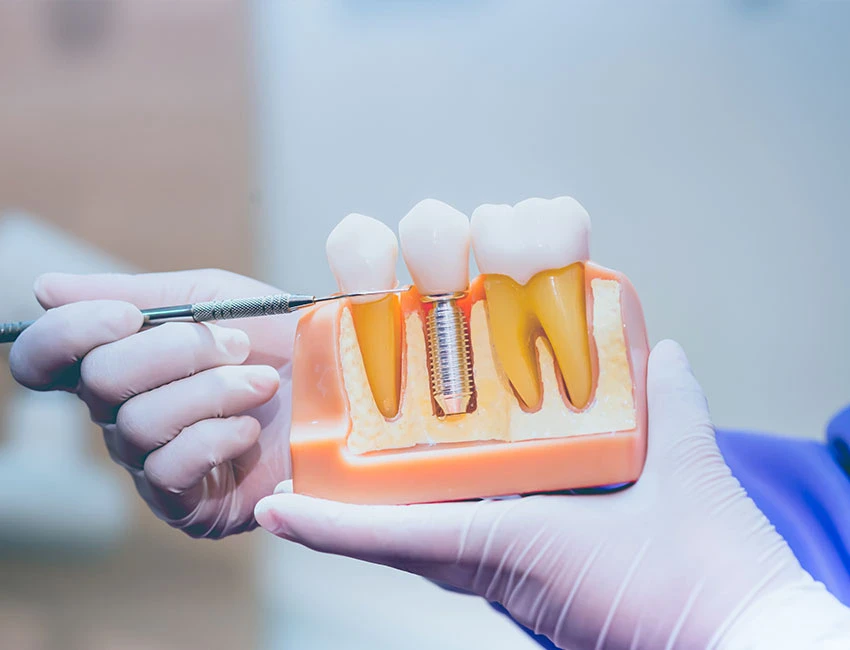
A dental implant is a titanium post surgically placed into the jawbone to serve as an artificial tooth root. Over several months, the bone fuses with the implant surface through a process called osseointegration. Once integrated, the implant supports a crown, bridge, or denture attachment. Because it sits within the bone, it transmits chewing forces directly into the jaw, preserving bone density the way a natural root would.
Dentures are removable prosthetics that sit on top of the gum tissue. Full dentures replace an entire arch; partial dentures clip onto remaining natural teeth. They restore function and appearance without surgery, but they do not replace the root structure of the missing teeth. Without that root-level stimulation, the jawbone beneath the denture gradually resorbs, changing the fit of the appliance and the contour of the lower face over time.
How Do They Compare Where It Matters Most?
The differences between dental implants vs. dentures show up most clearly across a few key categories that affect daily life and long-term health:
- Bone health: Implants actively preserve jawbone volume through functional stimulation; dentures allow bone resorption to continue, which eventually changes gum contour, facial structure, and denture fit
- Stability and function: Implants are fixed in place and allow patients to eat virtually any food without restriction; dentures can shift during eating and speaking, and typically require avoiding hard, sticky, or tough foods
- Maintenance: Implants are cleaned like natural teeth with brushing and flossing; dentures must be removed nightly, soaked, and cleaned separately, and adhesive is often needed to maintain a secure fit throughout the day
- Longevity: A well-maintained implant can last 20 years or more and often for a lifetime; traditional dentures typically need relining every few years and full replacement every 5 to 10 years as the jaw ridge changes shape
Who Is a Good Candidate for Each Option?
Dentures are accessible to nearly any patient who has lost teeth, regardless of bone volume or overall health. They require no surgery and no healing period, making them a practical option when speed or medical factors limit other choices.
Implants require adequate bone volume to anchor the post, healthy gum tissue, and no uncontrolled systemic conditions that significantly impair healing. Patients who have already experienced significant bone loss may need a bone graft before implant placement is feasible. Imaging and a clinical evaluation are necessary to determine whether bone volume and anatomy support the procedure.
For patients who cannot pursue implants due to health or bone volume concerns, implant-supported dentures offer a middle ground. A small number of implants anchor the denture for improved stability and some degree of bone stimulation, without requiring individual implants for every missing tooth.
Frequently Asked Questions
Can denture wearers switch to implants later?
Yes, but the amount of bone loss that has occurred while wearing dentures affects the feasibility. Patients who have worn dentures for many years may need bone grafting before implants can be placed. A consultation with imaging is the most reliable way to assess current bone volume and determine whether implants remain a realistic option.
Do dental implants feel like real teeth?
Most patients report that implants feel and function very similarly to natural teeth once fully healed. Because they are anchored in the bone, there is no movement, no reliance on adhesive, and no need to adjust eating habits. The crown or prosthetic on top is custom-made to match the surrounding teeth in size, shape, and color.
The Right Investment Is the One That Serves You for Decades
When comparing dental implants vs. dentures, the right choice depends on your bone health, your overall health, your timeline, and how you want your restoration to function day to day. For patients who are good candidates, implants consistently deliver better long-term value in function, bone preservation, and total cost. For those who need a faster or lower-cost starting point, dentures remain a practical and widely used solution.
If you want to learn more about dental implants, visit our Dental Implants in Fullerton page or schedule a consultation.